Book Recommendations Finance
A short, opinionated reading list, sorted by where you are: getting out of debt, starting to invest, or planning the long run.

Book Recommendations Finance
Three finance books will change what you do on payday, and that is the part that shows up in your account. So the list below is short, ordered by the stage you are actually at, and honest about which titles are worth your evenings.
The test I applied: does the book change a decision you make this month? Books that are enjoyable but inert did not make the cut.
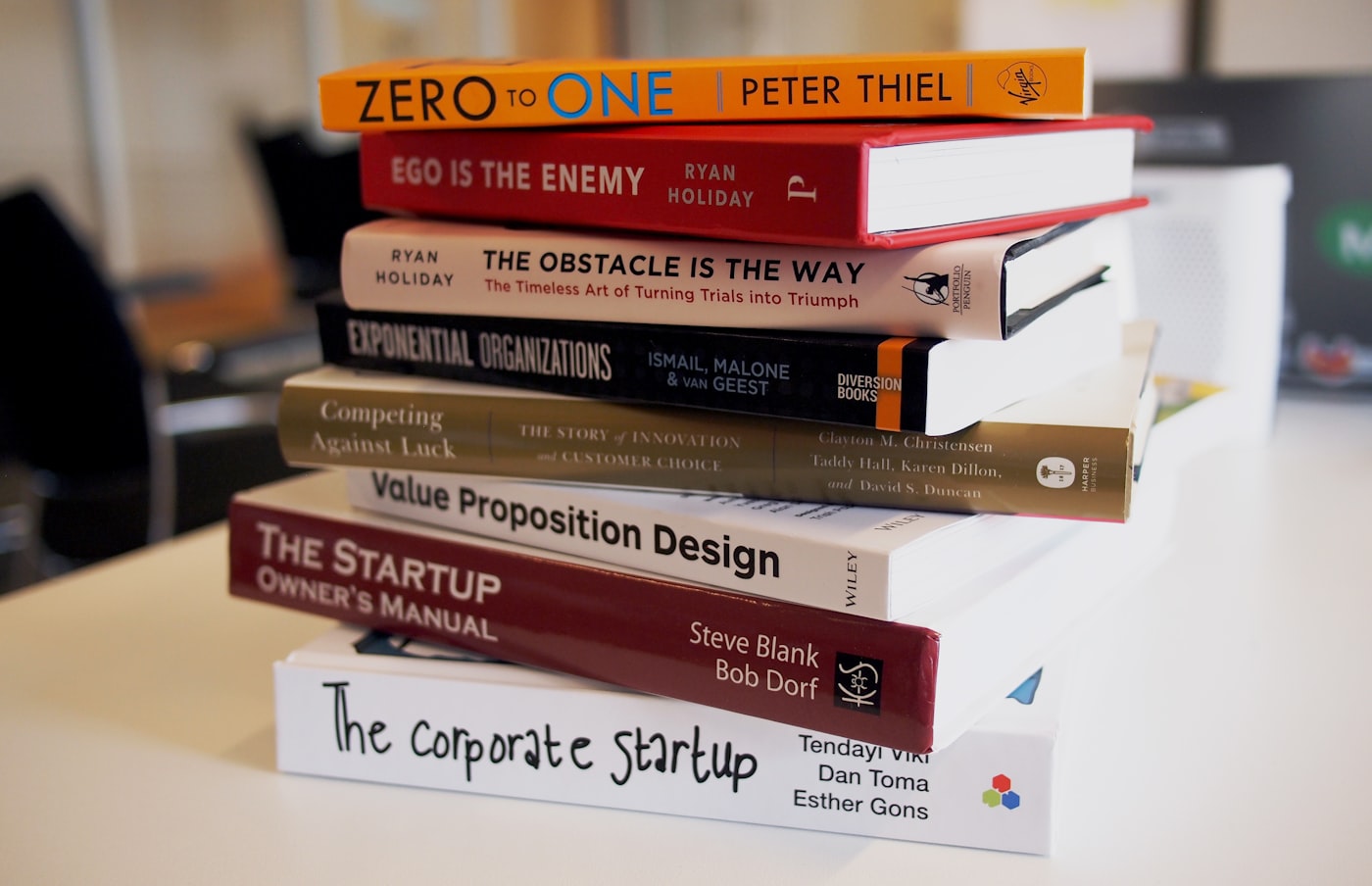
Start with these three
If you read nothing else, read these. They cover behaviour, strategy and conviction, in that order.
| Book | Author | First published | What it changes |
|---|---|---|---|
| The Psychology of Money | Morgan Housel | 2020 | You stop treating market drops as personal failures |
| The Simple Path to Wealth | JL Collins | 2016 | You buy one broad index fund and stop shopping |
| The Little Book of Common Sense Investing | John C. Bogle | 2007 | You check the expense ratio before anything else |
Housel is the one to read first, because the other two assume you can hold a position through a bad year. Collins then gives you the smallest possible portfolio: a total US stock market index fund, plus a bond fund once the numbers are large enough to hurt. Bogle supplies the evidence for why the cheap index fund wins. He founded Vanguard and built the first retail index fund, so he is not a neutral party, but the arithmetic is public and it holds.
A quick sense of why fees belong at the front of the queue. On 300 $ a month at 7 % gross, an expense ratio of 0,75 % instead of 0,05 % leaves you with about 333.000 $ after thirty years rather than 374.500 $. The 41.500 $ difference buys nothing at all — it is the same fund, the same market, the same contributions.
- 0,05 % expense ratio
- 0,75 % expense ratio
The same contributions, the same gross return, two different expense ratios.
Illustrative. 300 $ invested monthly, 7 % gross annual return, fees deducted monthly from the balance. Not a forecast, and no taxes or trading costs included.
Personal finance foundations
These are the operating manuals: automating money, killing expensive debt, deciding what "enough" looks like.
- I Will Teach You to Be Rich — Ramit Sethi, 2009. The most actionable of the group. Automate the boring parts, spend freely on what you actually love, cut the rest without ceremony. The best book for someone whose finances are currently a pile of good intentions.
- The Total Money Makeover — Dave Ramsey, 2003. Baby steps, gazelle intensity, smallest balance first. The behavioural case for clearing debt is strong. The investing advice in the later chapters is not; if you follow it you will pay fees that a three-fund portfolio does not charge.
- Broke Millennial — Erin Lowry, 2017. Written for people in their twenties with student loans and an entry-level salary. If that is not your situation, skip it.
- Your Money or Your Life — Vicki Robin and Joe Dominguez, 1992. Its real contribution is a subtraction: every purchase has an hours-of-your-life price. Useful. Read it before you read anything about side hustles.
Investing
Four books, and a warning that they overlap heavily. Overlap is fine here; repetition is how the behaviour sticks.
- A Random Walk Down Wall Street — Burton Malkiel, first published 1973, revised regularly. The academic case against stock picking, written for people who do not read academic papers.
- The Intelligent Investor — Benjamin Graham, 1949. Dense, dated in places, and still the source of the two ideas that matter most: Mr. Market's mood swings are not information, and you buy a margin of safety rather than a story. If the whole book defeats you, read chapters 8 and 20.
- The Bogleheads' Guide to Investing — Taylor Larimore, Mel Lindauer and Michael LeBoeuf. The practical companion: which accounts, in what order, with what allocations.
- Common Sense on Mutual Funds — John C. Bogle, 1999. Read this one only after The Little Book. It is longer and more technical, and it will not change your behaviour any further.
The investor's chief problem — and even his worst enemy — is likely to be himself.
Behaviour and the parts that are hard to hear
Atomic Habits — James Clear, 2018 — is not a finance book, and it belongs on this list more than most finance books do. Saving is a system problem, not a motivation problem: a standing transfer on payday beats a resolution every time.
The Millionaire Next Door — Thomas J. Stanley and William D. Danko, 1996 — surveyed people who actually accumulated money and found they were mostly unremarkable earners who lived below their means for decades. The finding is unglamorous, which is why it needed a book.
Die with Zero — Bill Perkins, 2020 — is the corrective to everything above. Money that arrives at 70 buys fewer experiences than money spent at 40, and an estate is not a scoreboard. Read it after you have an emergency fund, not before.
Where reading has to stop
Here is the part that a reading list tends to hide. The map from book to account is short:
- 401(k) up to the employer match, then a Roth or traditional IRA, then back to the 401(k).
- Inside those accounts, a target date fund or a total market index fund is a complete answer for most people.
- A taxable brokerage account only after the tax-advantaged space is full.
That is roughly two pages of prose. The rest of the library exists because doing it is uncomfortable, not because it is complicated.
Reading is a cheap substitute for the discomfort of committing, and past the third book the returns fall sharply. A 6-month emergency fund of 25.200 $ is the clearest example, because no book adds a dollar to it:
Against a 25.200 $ target, the remaining half is a schedule rather than a decision.
Illustrative. 4.200 $ of monthly essential spending, 6 months of cover, 4 % annual interest on the balance.
Reading order by where you are
Carrying credit card debt
Total Money Makeover, then Behaviour. Clear anything above 8 % APR before investing a cent.
First job, no system
I Will Teach You to Be Rich, then The Psychology of Money.
Investing already, unsure about fees
The Little Book of Common Sense Investing, then the Bogleheads' Guide.
Long-term investor who has stopped believing
The Psychology of Money again, and Die with Zero for balance.
German-language reader
Gerd Kommer, Souverän investieren mit Indexfonds und ETFs, and Der Finanzwesir by Albert Warnecke. Both are written for German tax and account rules, which no US title covers.
Borrowing instead of buying
Libraries hold all of these. A US public library card usually comes with Libby for ebooks and audiobooks, and the wait for a popular personal finance title is often shorter than the queue for a novel. Twenty minutes on a waiting list beats forty dollars and a shelf you will not revisit.
What to do about conflicting advice
These authors genuinely disagree. Ramsey hates debt and tells you to invest in actively managed funds; Bogle would tell you to buy the index and ignore the funds. Collins thinks one fund is enough; Malkiel still argues that valuations matter.
The disagreements are mostly about the parts that are hard to predict. Where they agree is more useful: spend less than you earn, own the market cheaply, automate the decision, and hold for decades. Four rules, four authors, no exceptions. When four writers with different incentives say the same sentence, that sentence is probably the whole game.
56 more deep dives are in the Navigator library.


